ModuMed
A Modular Healthcare System for Rural Mobile Medical Units — integrating medicine storage, cold-chain, diagnostics, and deployable workspace.
Problem & Context
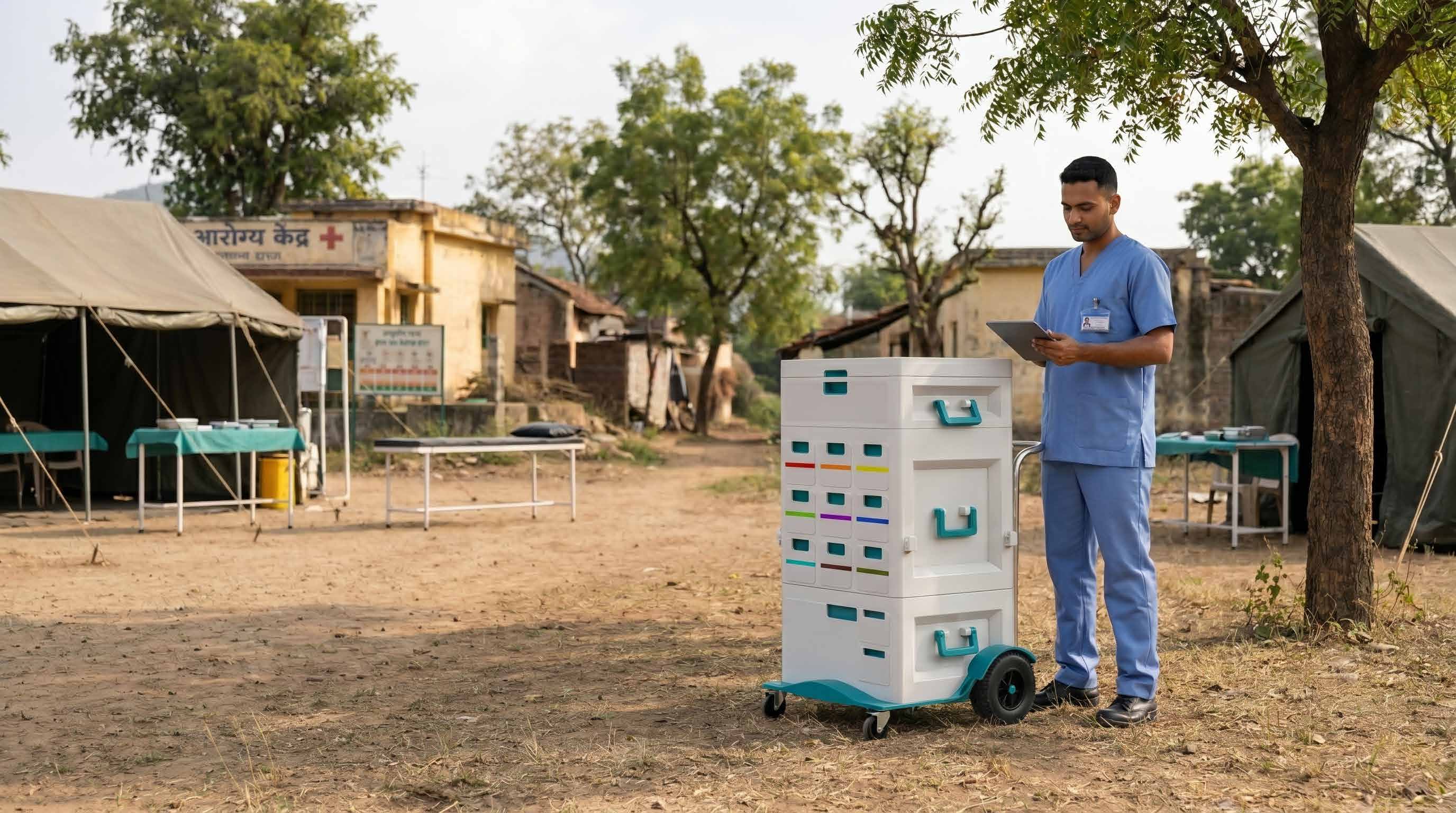
Nearly 65% of India's population lives in rural areas, where healthcare access remains limited due to infrastructure gaps, workforce shortages, and inadequate diagnostic facilities.
Mobile Medical Units (MMUs) act as moving healthcare centers, but existing units often struggle with:
Limited diagnostic capabilities
Constrained workspaces
Poor equipment organization
Inefficient storage systems
Field Research
Two field visits to rural healthcare facilities with observations, interviews, and stakeholder insights.
Participants: Dr. Kajol (Medical Officer), Dr. Akshay (Pharmacist)
Population: 879 (Male: 456, Female: 423)
- Patient records maintained manually, making tracking difficult
- Limited workspace restricts efficient equipment placement
- Poor medicine organization reduces accessibility
- Car lacks needed suspension for remote areas
Participants: Dr. Sushil Bagul (Doctor), Sis. Snehal Patil (Sister)
Population: 1,890 (Male: 910, Female: 980)
- Unorganized medicine affects quality and access
- Car lacks suspension, not suitable for remote areas
- Patient records maintained manually
- Inefficient space for machines, unorganized workspace
User Research
In-depth interviews with healthcare professionals revealed critical workflow challenges.
Dr. Vikrant Mungi
MMU Coordinator, Guruji Hospital
Prevalent Conditions
High prevalence of Non-Communicable Diseases (NCDs) — hypertension, diabetes, cardiovascular issues, thyroid disorders, and anemia in the Igatpuri region.
Diagnostic Needs
Emphasized the need for “Point-of-Care” technology (portable ECGs, blood testing devices) on the vehicle. Transporting samples to central labs often results in hemolysis due to vibrations on rough roads.
Vehicle Challenges
Fully equipped vehicles become heavy due to instrument weight. Terrain also affects vehicle performance.
Dr. Sushil Bagul
MMU OPD Doctor, Guruji Hospital
Storage & Cold Chain
Critical lack of portable cold storage for vaccines, injections, and blood samples. Current layout lacks organized segregation for medicines.
Digital Void
Patient records kept manually on paper, creating “data silos” that prevent the main hospital from tracking disease outbreaks or patient history in real-time.
Clinical Urgency
Critical anemia levels (6–7 g/dL) in women and high frequency of fungal infections requiring immediate blood testing — currently delayed due to lack of onboard lab.
Key Findings
Workflow Challenges
Limited space and overlapping tasks reduce operational efficiency.
Equipment & Storage
Unorganized storage makes equipment access difficult and inefficient.
Diagnostic Limitations
Limited diagnostic tools delay accurate and timely healthcare decisions.
Data Management Gaps
Manual record-keeping creates delays and disrupts patient tracking.
Design Direction
Based on impact vs urgency analysis, the final direction: a portable modular workspace deployable outside the MMU.
Design Brief
To design a portable Mobile Medical Unit (MMU) system with a detachable workspace that expands beyond the vehicle to improve and enhance diagnostic efficiency for adaptable healthcare in rural and remote India.
Final Product
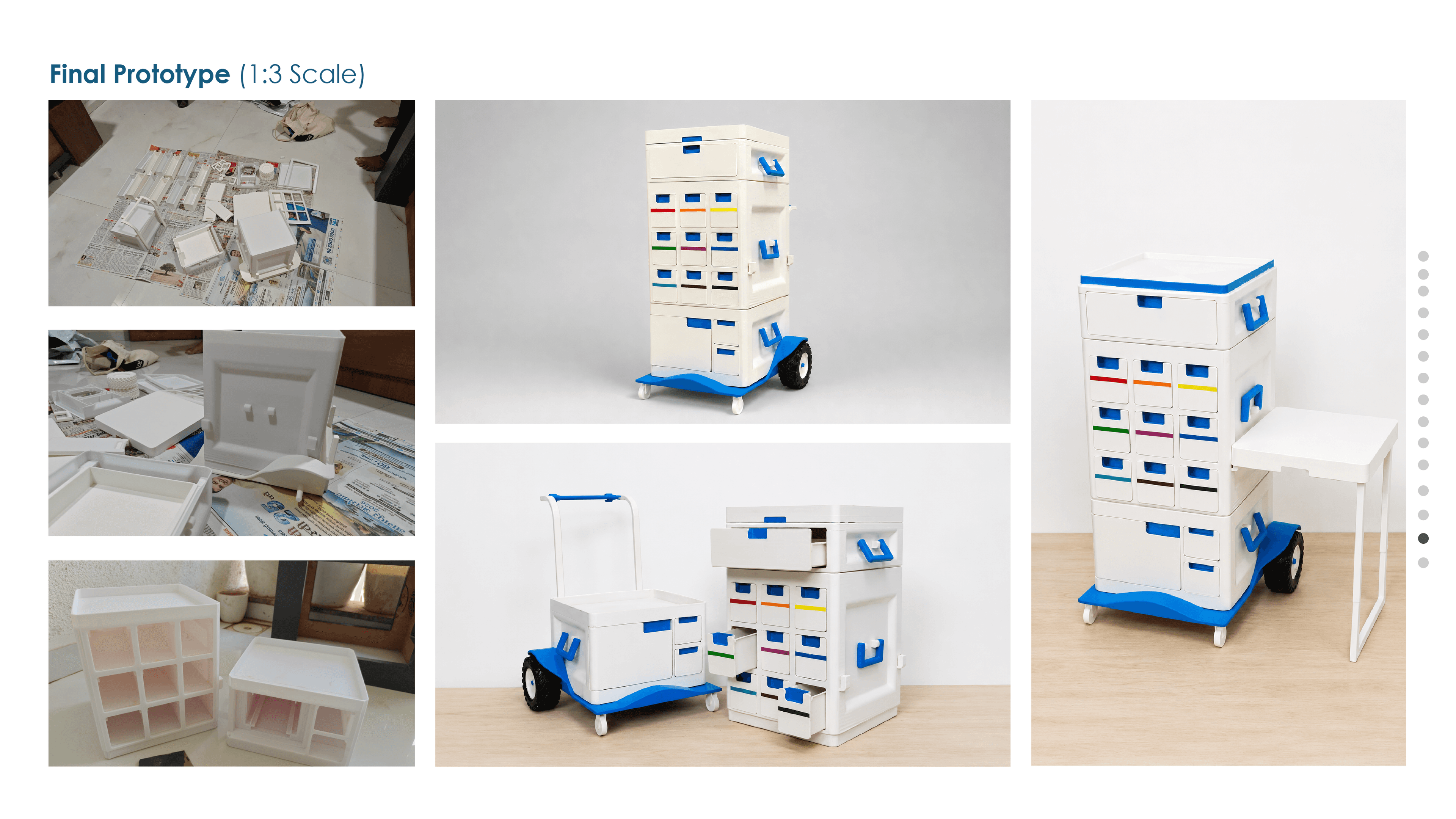
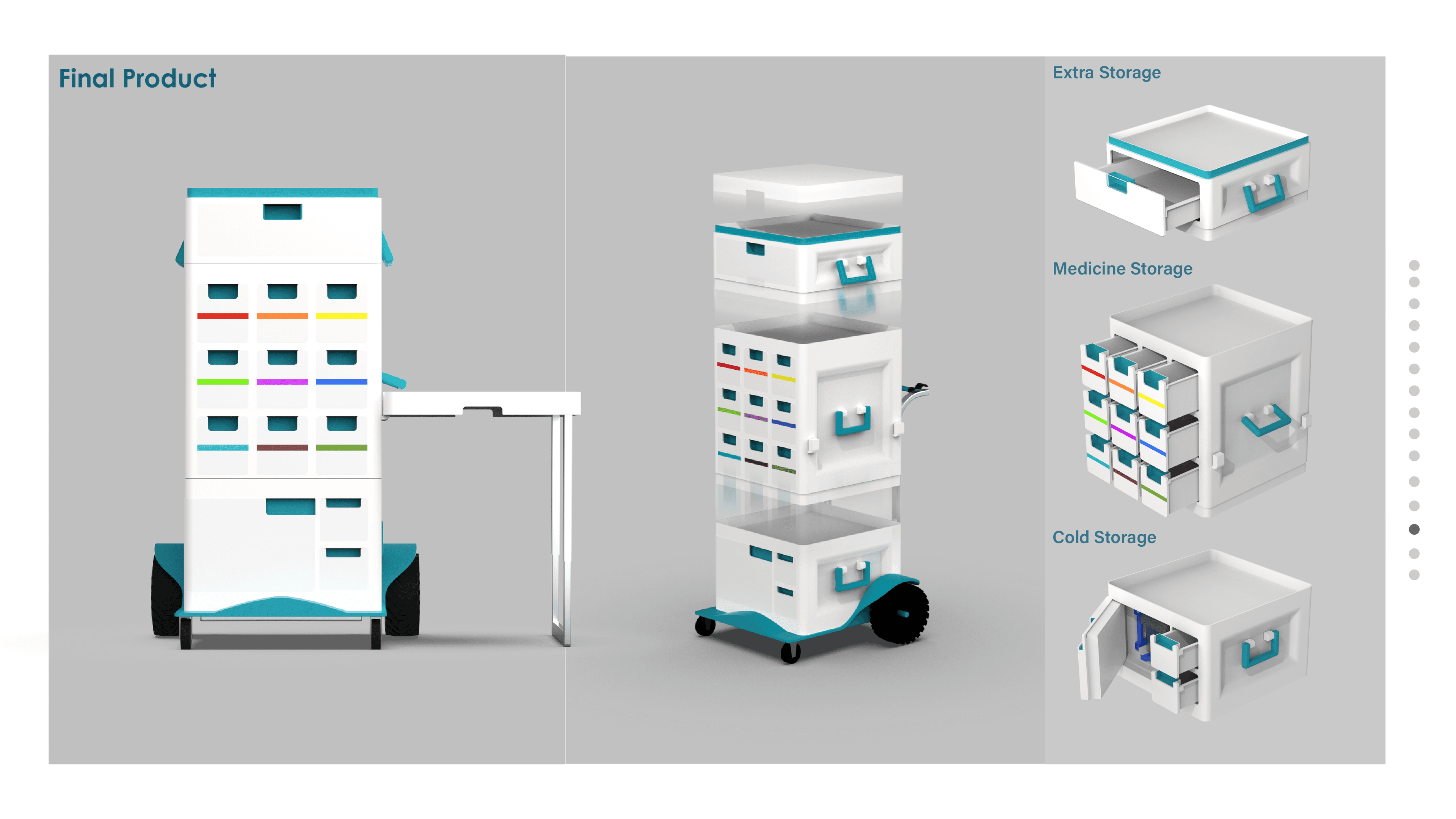
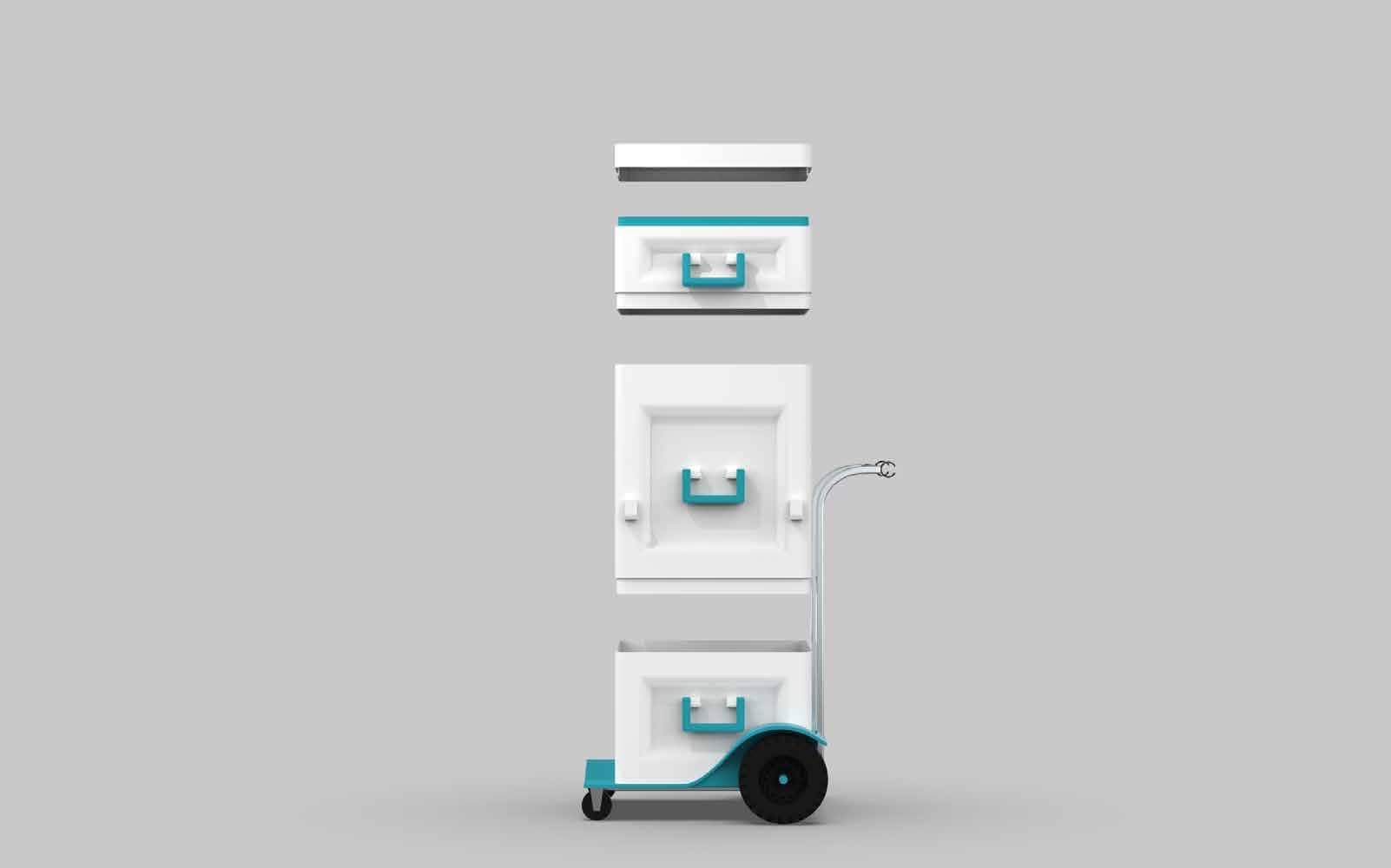
A 1:3 scale prototype was built and tested to validate ergonomics, deployment mechanisms, and integration with existing MMU vehicles.